
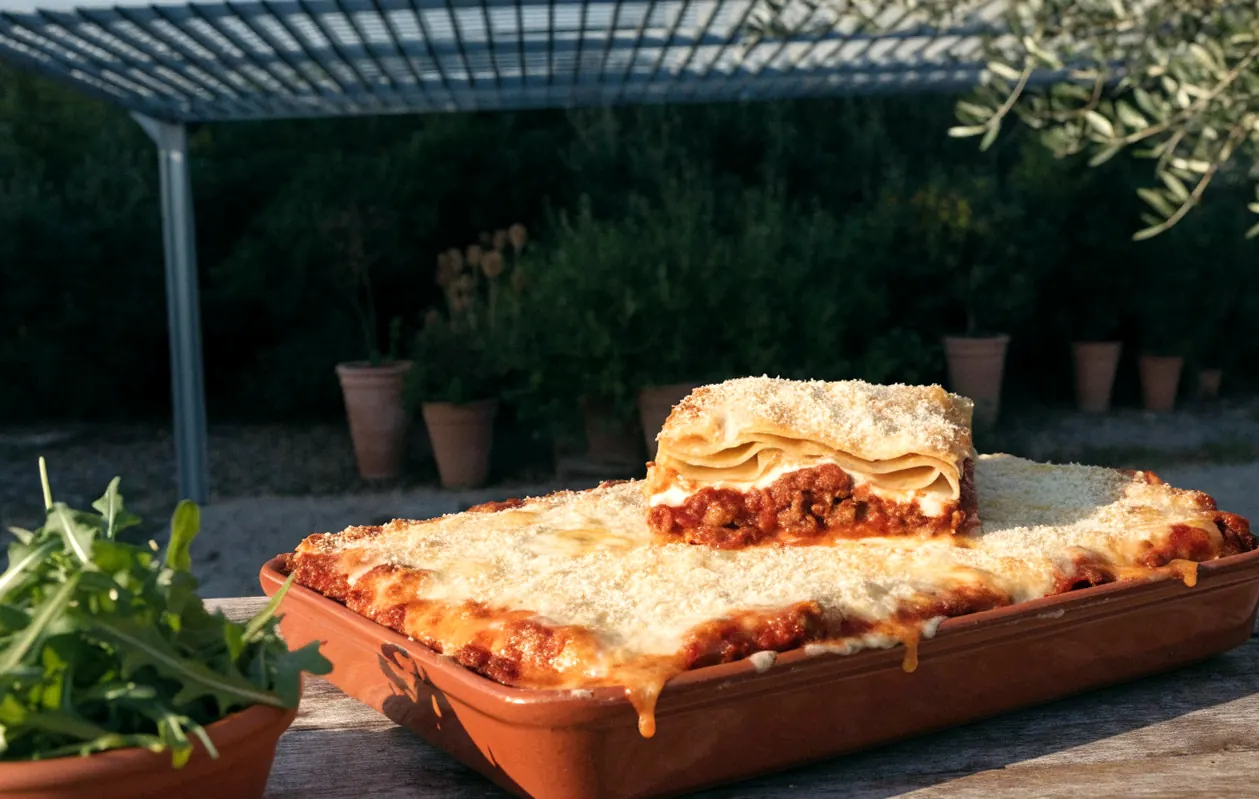
Fresh lasagna sheets and dry sheets labeled «no pre-cooking required» are placed in the dish raw: they cook in the oven in the sauce, provided the sauce is liquid enough to cover them completely. Only dry sheets that are specifically instructed to do so on the package should be boiled in salted water for 2 to 3 minutes.
As a fan of chichourle, I’ve found that a lasagna with a hard crust is almost always the result of a sheet that wasn’t covered properly. Here’s my method—and the dish that warms up the pergola when the mistral picks up.
Ingredients for 6 people (30 × 22 cm baking dish)
- 250 g dry lasagna sheets (12 to 15 sheets) or 300 g fresh lasagna sheets
- 500 g ground beef with 15 % fat content
- 1 onion, 1 carrot, and 1 stalk of celery
- 2 cloves of garlic
- 3 tablespoons of olive oil
- 10 cl of red wine
- 700 g tomato sauce (passata)
- 1 tablespoon tomato paste
- 1 sprig of thyme and 1 bay leaf
- 50 g of butter and 50 g of flour
- 80 cl of whole milk
- 1 pinch of nutmeg
- 80 g grated Parmesan cheese
- Salt and pepper
For 2 people, divide everything by three and assemble three layers in a 20 × 15 cm dish.
Preparation: 30 min · Cooking: 1 hour 20 minutes for the sauce, then 45 minutes in the oven · Rest: 15 min
The Step-by-Step Recipe
- Finely chop the onion, carrot, celery, and garlic. Sauté them for 8 minutes in olive oil over medium heat, without letting them brown.
- Add the meat and brown it for 8 to 10 minutes, breaking it up as you go, until it is no longer pink. Deglaze with red wine and let it reduce for 2 minutes.
- Add the tomato sauce, tomato paste, thyme, and bay leaf, then season with salt and pepper. Let it simmer for 1 hour over low heat, partially covered. The sauce should remain thick enough to coat the dish: add 10 cl of water if you’re using uncooked leaves.
- Prepare the béchamel sauce: melt the butter, add the flour, stir for 1 minute, then pour in the cold milk all at once while whisking. Let it thicken for 5 to 8 minutes over low heat, then season with salt and pepper and add the nutmeg.
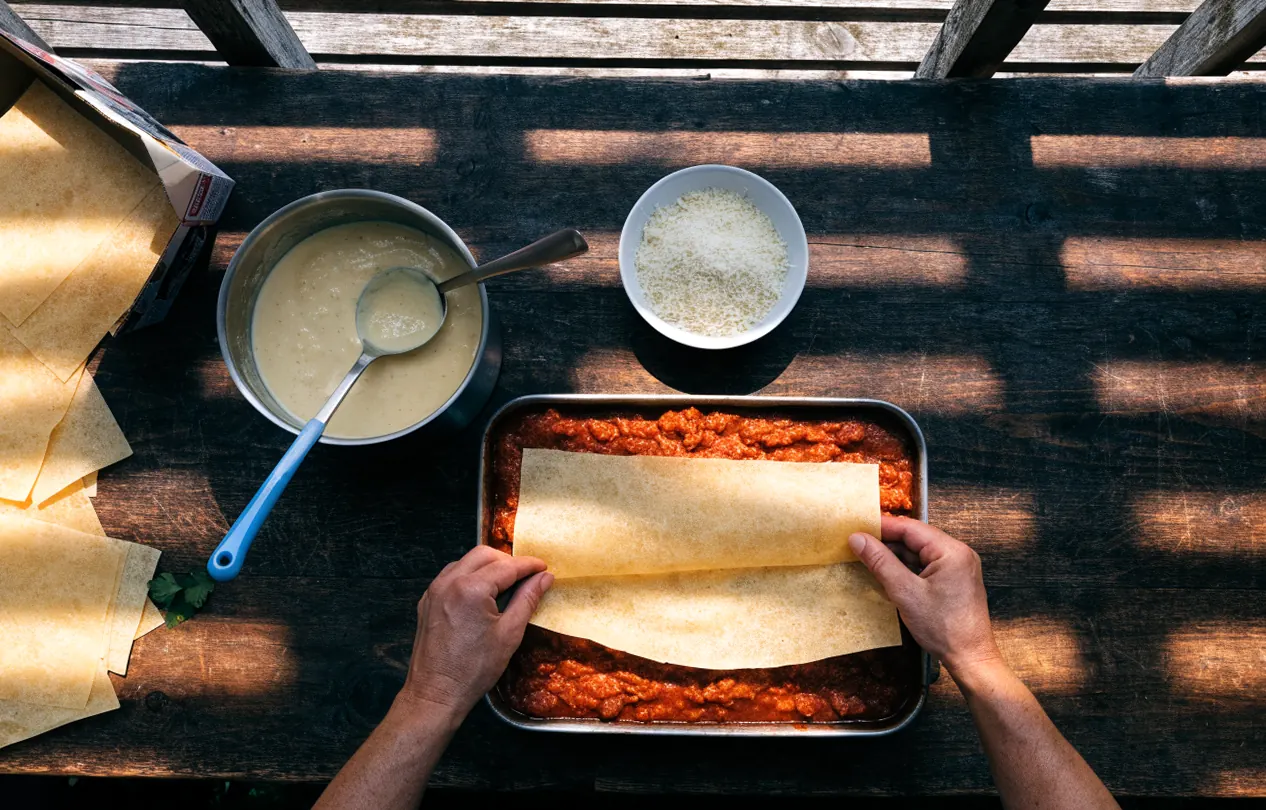
- Preheat the oven to 180 °C. Spread a ladleful of béchamel sauce on the bottom of the dish, then add a layer of pasta sheets without overlapping them, breaking them to fill in any gaps.
- Layer the ragù, béchamel, Parmesan, and pasta sheets in 4 layers. Finish with pasta sheets coated with béchamel all the way to the edges, then sprinkle the remaining Parmesan on top: no pasta sheet should be left uncovered.
- Bake for 40 to 45 minutes, or 30 to 35 minutes if using fresh leaves, covered with aluminum foil for the first 20 minutes. A knife should slide through easily.
- Let it rest for 15 minutes before serving: this helps the layers hold their shape and ensures clean slices.
My Cooking Tips
- The knife test: If it stumbles, the leaves in the middle aren't getting enough liquid. Pour 5 cl of milk around the edges, cover, and let it sit for another 10 minutes.
- Fresh leaves that stick together: Lightly dust them with flour and separate them one by one before whipping, otherwise they'll stick together in a clump.
- Got any extra fresh leaves? Cut them into wide strips, cook them for 2 minutes in boiling salted water, and serve them with the rest of the ragù. There you go—second meal.
- Fall Edition: Replace the ragù with 800 g of roasted squash, 300 g of sautéed spinach, and 250 g of ricotta.
Under the pergola: how to serve
Lasagna is served in the middle of the table, in its baking dish, with a arugula salad and shavings of Parmesan. As for wine, a young Bandol red or a full-bodied rosé—to be enjoyed in moderation. And bread for mopping up the sauce, of course.
This is the perfect dish to prepare the day before: assemble them, cover them, and store them in the fridge for up to 24 hours, then cook for an additional 10 minutes. Once cooked, they will keep for 3 days and can be reheated for 20 minutes at 160 °C, covered. Under the closed bioclimatic pergola, we linger at the table until coffee time.
Your Questions
Do you need to cook the lasagna sheets?
No, not for fresh or dry sheets that don't require pre-cooking—those go straight into the oven. Yes, 2 to 3 minutes for dry sheets whose package calls for pre-cooking. In any case, the sauce must cover them completely.
How do you use lasagna sheets?
Lay them flat, without overlapping, between two layers of sauce. Always start with a thin layer of béchamel so they don’t stick, and finish with a generous layer of sauce. They can also be used to make rolled cannelloni.
How do you make homemade lasagna noodles?
Knead 300 g of flour—ideally type 00—with 3 eggs and a pinch of salt for 10 minutes, until the dough is smooth. Let it rest for 30 minutes covered with plastic wrap, roll it out very thinly using a pasta machine or rolling pin, and cut it to fit your baking dish. Place them in the dish raw, just like fresh pasta sheets.
Which lasagna sheet should you choose?
For everyday use, the dry lasagna sheets that don’t require pre-cooking work just fine. The fresh ones make for a creamier lasagna and cook faster. The homemade ones are for Sundays: you can tell the difference from the very first bite.


Leave a Reply