
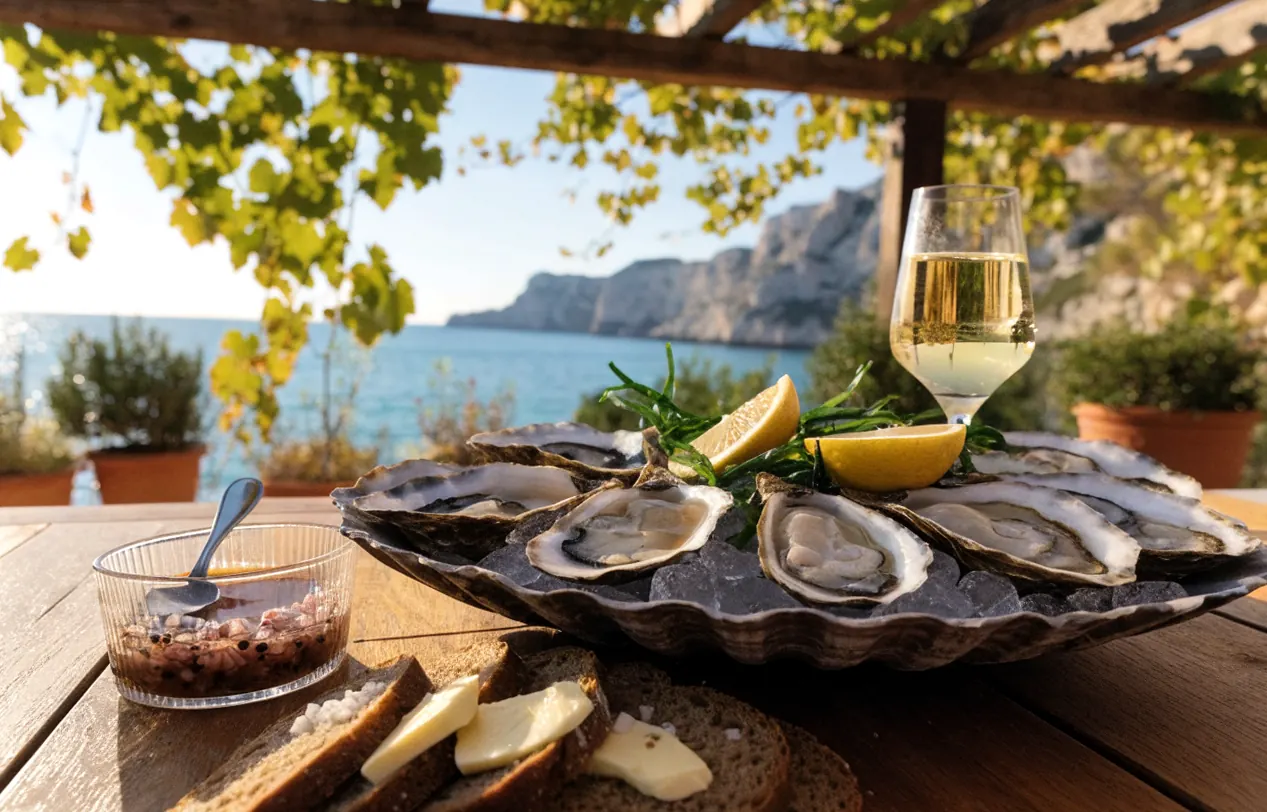
The shallot vinegar sauce is called “mignonnette”: 2 gray shallots, finely chopped; 10 cl of red wine vinegar; and a pinch of coarsely ground black pepper. Let it sit for 30 minutes in the refrigerator. Just half a spoonful on each raw oyster is enough, and it can also be made into a balsamic and honey vinaigrette.
In the fall, oysters are at their best. With a platter, some rye bread, and a small bottle of wine, the pergola takes on the feel of a beach hut in Les Goudes.
Ingredients for 4 people
- 2 gray shallots (about 60 g)
- 10 cl of good-quality red wine vinegar
- 1 teaspoon black peppercorns
- 1 small pinch of salt (optional)
- 24 to 36 flat oysters from the Mediterranean, Bouzigues, or Tamaris—6 to 9 per person
- 1 kg of crushed ice or coarse salt for the tray
- 2 lemons
- Rye bread and lightly salted butter
Serves 2: 1 shallot, 5 cl of vinegar, and 12 to 18 oysters.
Preparation: 20 min · Rest: 30 min
- An oyster knife and a protective glove, or a thick, folded dish towel
The Step-by-Step Recipe
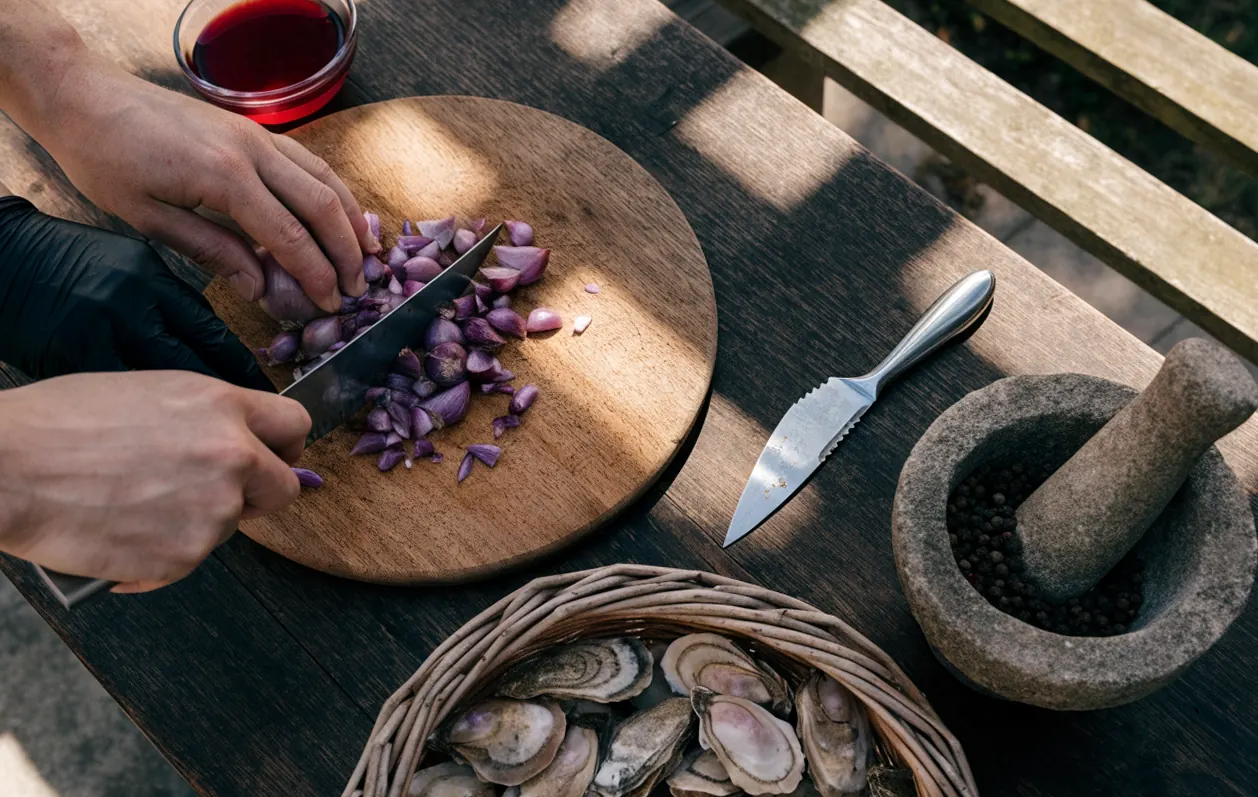
- Peel the shallots and chop them into very small cubes, 1 to 2 mm in size: the finer the chop, the better the mignonnette.
- Crush the pepper in a mortar or against the bottom of a saucepan. You want chunks, not powder.
- Mix the shallots, vinegar, pepper, and salt in a small bowl. Cover and let sit for 30 minutes to 1 hour in the refrigerator: the shallots will soften and infuse the vinegar with their flavor.
- Check the oysters: the shell should be tightly closed, or close when you tap it, and the oyster should feel heavy and full of water. Set aside any that remain slightly open.
- To open them, protect your hand, hold the oyster with the concave side facing down, and slide the knife between the two shells on the right side. Move the knife up against the top shell to cut through the muscle, then remove the top shell.
- An open oyster should be shiny, smell like the fresh sea, and retract when you touch its edge. If you have even the slightest doubt, throw it away. You can discard the first batch of water; it will produce a new, milder batch in a few minutes.
- Arrange the oysters on the crushed ice and serve immediately, along with the small bottle of oyster sauce, a small spoon, and lemon wedges.
My Cooking Tips
- Shallot-Balsamic-Honey Vinaigrette : 1 shallot, finely chopped; 1 tablespoon balsamic vinegar; 1 teaspoon honey; 1 teaspoon mustard; 4 tablespoons olive oil; salt and pepper. Perfect on lamb’s lettuce with goat cheese or grilled fish.
- Homemade Shallot Vinegar : Place 3 thinly sliced shallots (100 g) in 50 cl of wine vinegar in a clean, sealed jar, and let sit in the refrigerator for 2 to 3 weeks. Strain, rebottle, store in a cool place, and use within 2 months.
- Don't prepare the mignonnette more than 24 hours in advance: the shallot will get soft and lose its flavor.
- Oysters should be stored at a temperature between 5 and 15 °C, in a cool place, covered with a damp cloth; never store them in fresh water or in the freezer. Eat them before the date indicated on the basket.
Under the pergola: how to serve
I place the platter in the center of the table, along with the bowl of mignonnette, the lemon, and a basket of buttered rye bread, and everyone digs in, nibbles, and starts over. A nice, chilled Cassis white wine—in moderation—is the perfect pairing for Mediterranean oysters, you know.
Open the oysters at the last minute—no later than 1 hour beforehand—and keep the platter chilled. An opened oyster that’s been sitting in the sun? Poor thing—that’s a no-go.
Your Questions
How do you make a shallot vinaigrette?
Let 1 finely chopped shallot macerate for 5 minutes in 2 tablespoons of vinegar with a pinch of salt; add 1 teaspoon of mustard, then 6 tablespoons of oil while whisking. Season with pepper, and it’s ready. Marinating the shallot mellows its sharpness.
What is the recipe for shallot sauce with red wine vinegar?
It’s the little jar shown above: 1 shallot, finely chopped, mixed with 5 cl of red wine vinegar, crushed pepper, and left to rest in the refrigerator for 30 minutes. Without oil, it retains its brightness and brings out the briny flavor of the oysters.
How do you make a shallot sauce with balsamic vinegar?
Replace the wine vinegar with balsamic vinegar, which is milder, and add olive oil and a little honey for balance. This version pairs better with grilled fish, a salad, or warm goat cheese than with oysters, as it would overpower their flavor.
What is the recipe for shallot vinegar?
Let finely chopped shallots macerate in wine vinegar for 2 to 3 weeks in the refrigerator, then strain. Use about 100 g of shallots for every 50 cl of vinegar. It adds flavor to salad dressings, deglazures, and marinades.
How many oysters should you plan on per person?
Allow 6 oysters per person as an appetizer, and 9 to 12 if they are the main course. For the mignonnette sauce, 2 shallots and 10 cl of vinegar are enough for 4 to 6 people.
Leave a Reply