
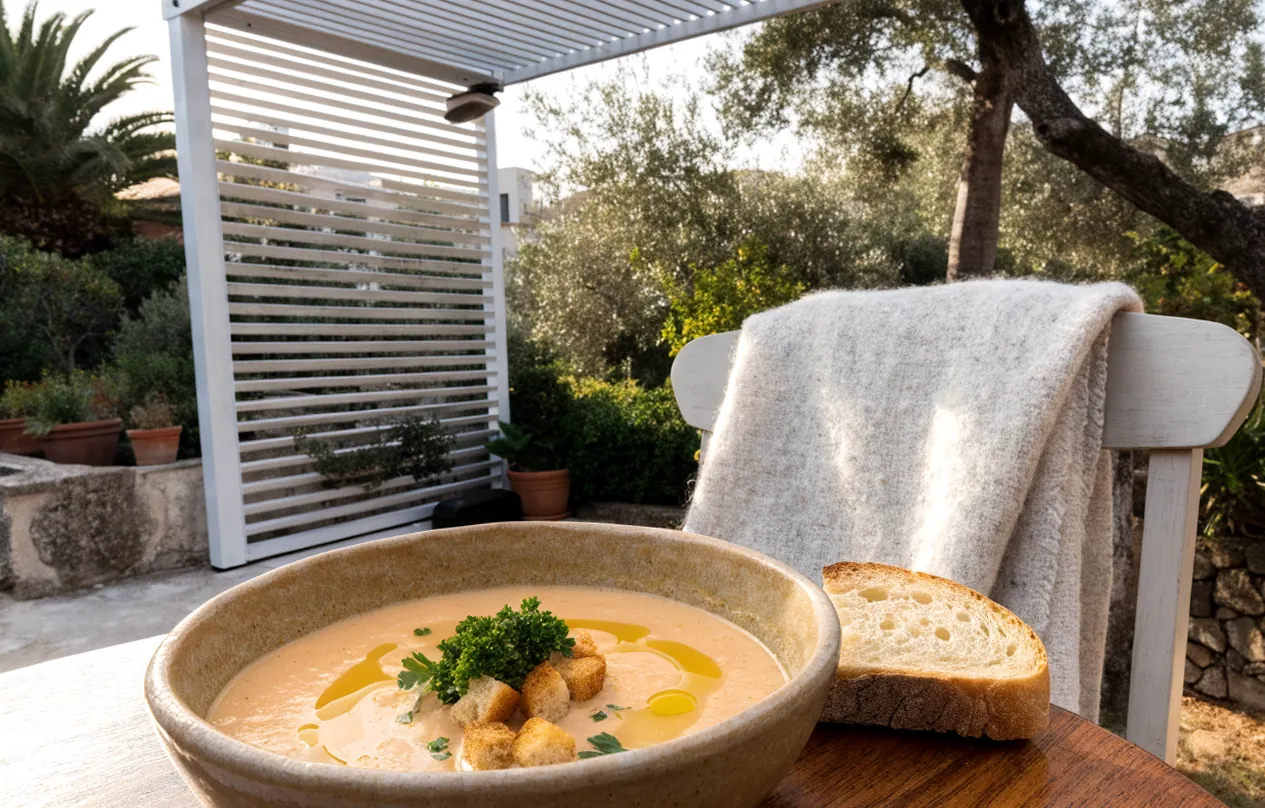
Potage or soup? Potage is a blended vegetable soup that’s smooth and thick. To make a good vegetable potage, sweat the leeks and onion, add chopped carrots, potatoes, and turnips, cover with water or broth, let it cook for 30 minutes, and blend.
When the mistral whistles through the slats of the pergola—poor thing—there’s nothing like a steaming bowl in your hands and a blanket on your lap.
Ingredients for 6 people
- 2 leeks (about 400 g)
- 3 carrots (300 g)
- 2 potatoes (400 g)
- 1 turnip (150 g)
- 1 stalk of celery
- 1 onion
- 2 tablespoons olive oil or 20 g butter
- 1.5 liters of water or vegetable broth
- 1 bay leaf and 2 sprigs of thyme
- Salt and pepper
- To serve: 2 slices of country bread, 1 clove of garlic, olive oil, and parsley
For 2 people, divide all the ingredients by three, or make the entire recipe: the soup will keep for 3 days in the fridge and freezes very well.
Preparation: 20 min · Cooking: 35 min
The Step-by-Step Recipe
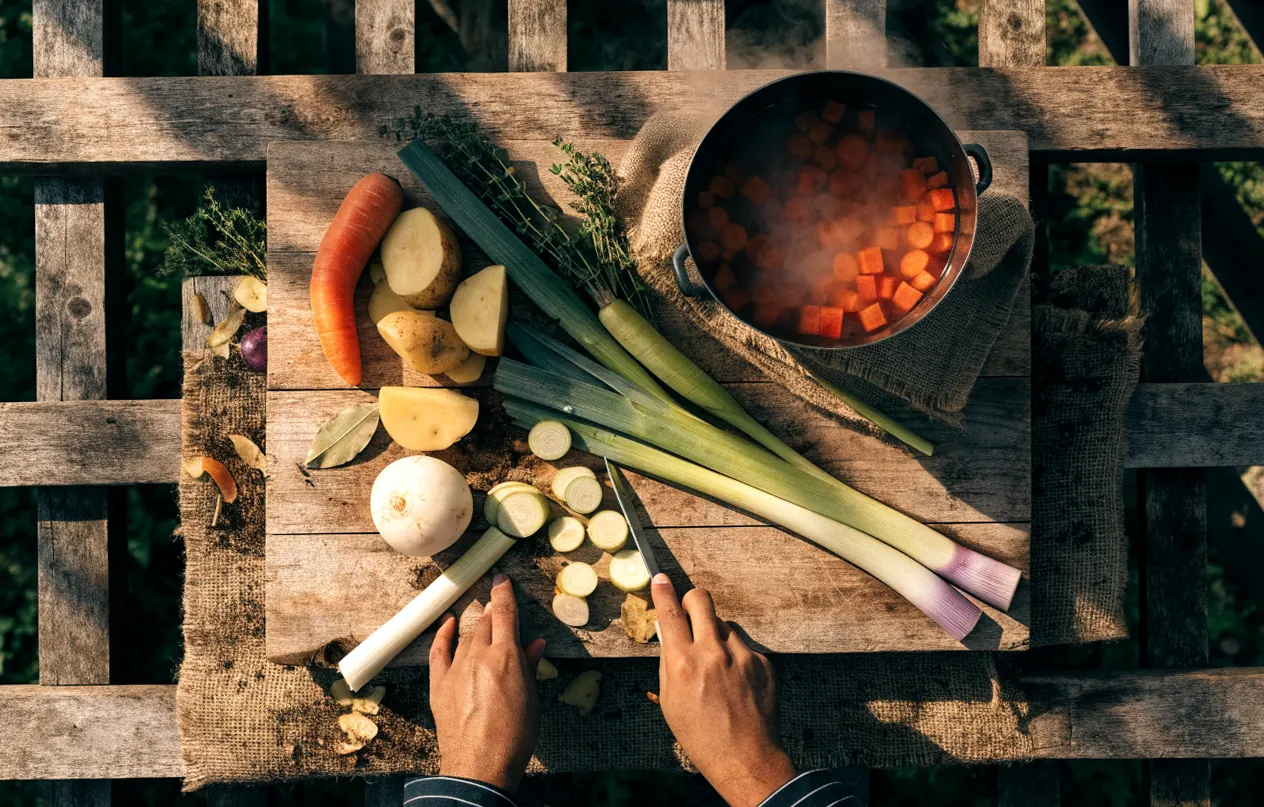
- Peel and wash the vegetables. Cut the leeks in half to rinse out the dirt between the layers, then slice them thinly along with the onion.
- Cut the carrots, potatoes, turnips, and celery into 2-cm pieces of uniform size to ensure even cooking.
- In a large saucepan, sweat the leeks and onion in olive oil for 5 minutes over medium heat, without letting them brown.
- Add the rest of the vegetables, the bay leaf, the thyme, and the water or broth. Season lightly with salt—or not at all if your broth is already salty—and bring to a boil.
- Reduce the heat, cover three-quarters of the pot, and let it simmer for 25 to 30 minutes, until the vegetables fall apart when pierced with a fork.
- Remove the bay leaf and thyme, then blend thoroughly. Adjust the consistency: add a little hot water if it’s too thick, or let it simmer uncovered for a few minutes if it’s too thin.
- Season with salt and pepper. Brown the diced bread—rubbed with garlic—in a skillet, and serve piping hot with a drizzle of olive oil and some parsley.
My Cooking Tips
- The potato gives the soup its creamy texture: It's what thickens the soup—without a drop of cream. For an extra treat, add 1 tablespoon of crème fraîche per bowl.
- Don't overcook the vegetables: The liquid should cover them by 2 cm, no more. You can always add more during blending, but you can never take any out.
- Fall Edition: Replace the turnip and one carrot with 400 g of potimarron or squash, which is sweeter and more orange in color.
- Pistou in the bowl: Blend some parsley or basil, garlic, and olive oil, and spoon some on top just before serving. Wow, it really makes all the difference.
Under the pergola: how to serve
A vegetable soup becomes a full-fledged dinner when served with toast, a piece of cheese, and a salad. For a more complete meal, add a poached egg to each bowl. A glass of Palette white or Bandol rosé—in moderation—and the evening is off to a great start.
It can be prepared ahead of time with no problem: 3 days in the fridge in a sealed container, or 3 months in the freezer in portions, after cooling it quickly. Under the closed bioclimatic pergola, with supplemental heating, serve it in thick bowls that retain heat.
Your Questions
What is the difference between "soupe" and "potage"?
Originally, “soupe” referred to a slice of bread over which broth was poured, and “potage” referred to anything that was cooked in a pot. Today, “potage” tends to refer to a blended, smooth vegetable soup, while “soupe” refers to a more rustic preparation, often with chunks of ingredients. In practice, the two terms are often used interchangeably.
Is it okay to eat soup in the evening?
Yes, it’s actually a light and comforting dinner, perfect for fall. If you have trouble sleeping after eating a large bowl, it’s often because of the amount of liquid, or because certain vegetables—like cabbage—can cause bloating in some people. In that case, opt for a thicker soup and a reasonable portion.
How do you make a good vegetable soup?
First, sweat the leeks and onion to bring out their flavor, add a potato to thicken the soup, and don't use too much water. Season in two stages: first, before blending, and then again after blending. And choose seasonal vegetables—they have more flavor.
What is the healthiest soup?
There’s no such thing as a “miracle” soup, but a mix of seasonal vegetables—lightly salted and not too creamy—is an excellent choice. Vary the colors from week to week: carrots, squash, leeks, and leafy greens. To make it more filling, add a handful of red lentils.
What vegetables should you put in soup?
The classic base: leeks, carrots, potatoes, onions, turnips, and celery. In the fall, add squash, pumpkin, or parsnips; in the winter, add cauliflower or celeriac. Four or five vegetables are enough to keep the flavor clean.

Leave a Reply