
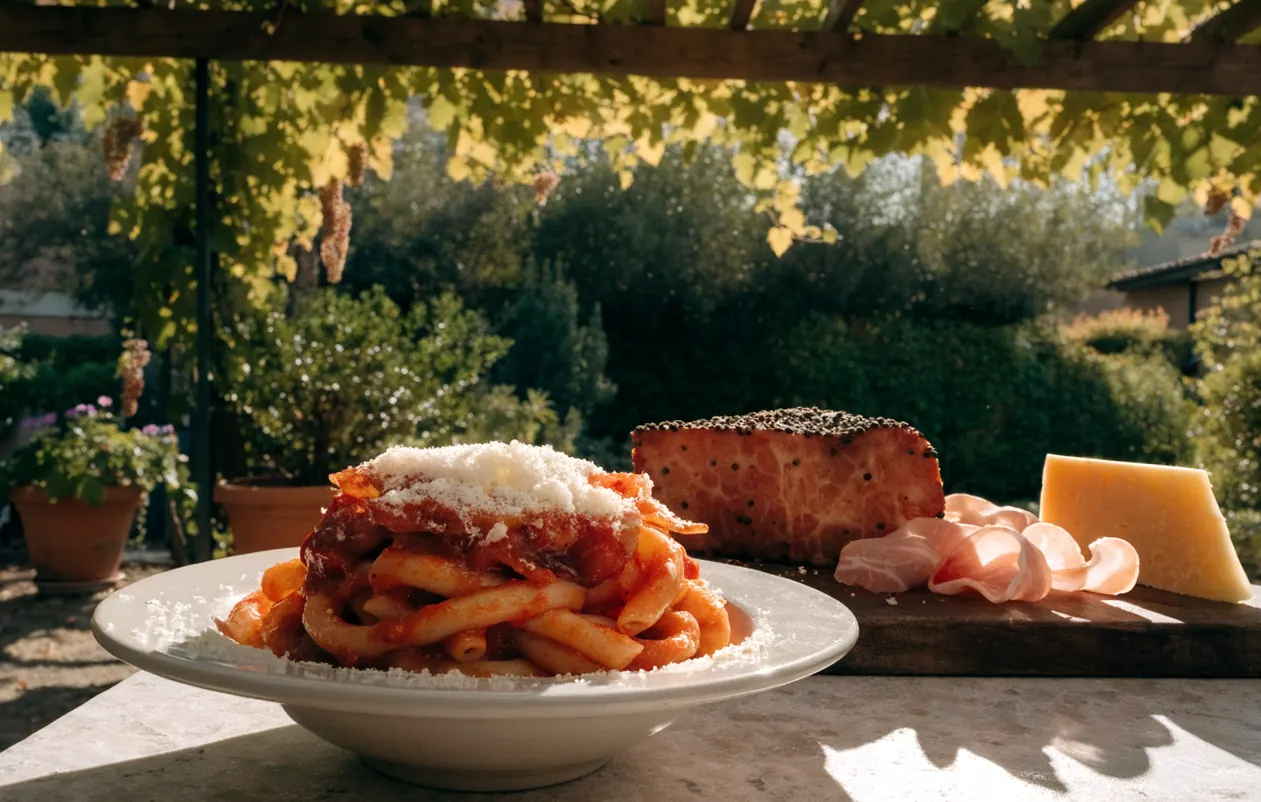
The most famous Italian bacon is the guanciale, salted, peppered, and dried pork cheek, which is cut into strips for carbonara or amatriciana. Its cousin, the pancetta, comes from the belly—either plain or smoked—and is more like our bacon.
Hey, let's make the introductions, and then we'll move on to an amatriciana that will silence everyone at the table under the pergola.
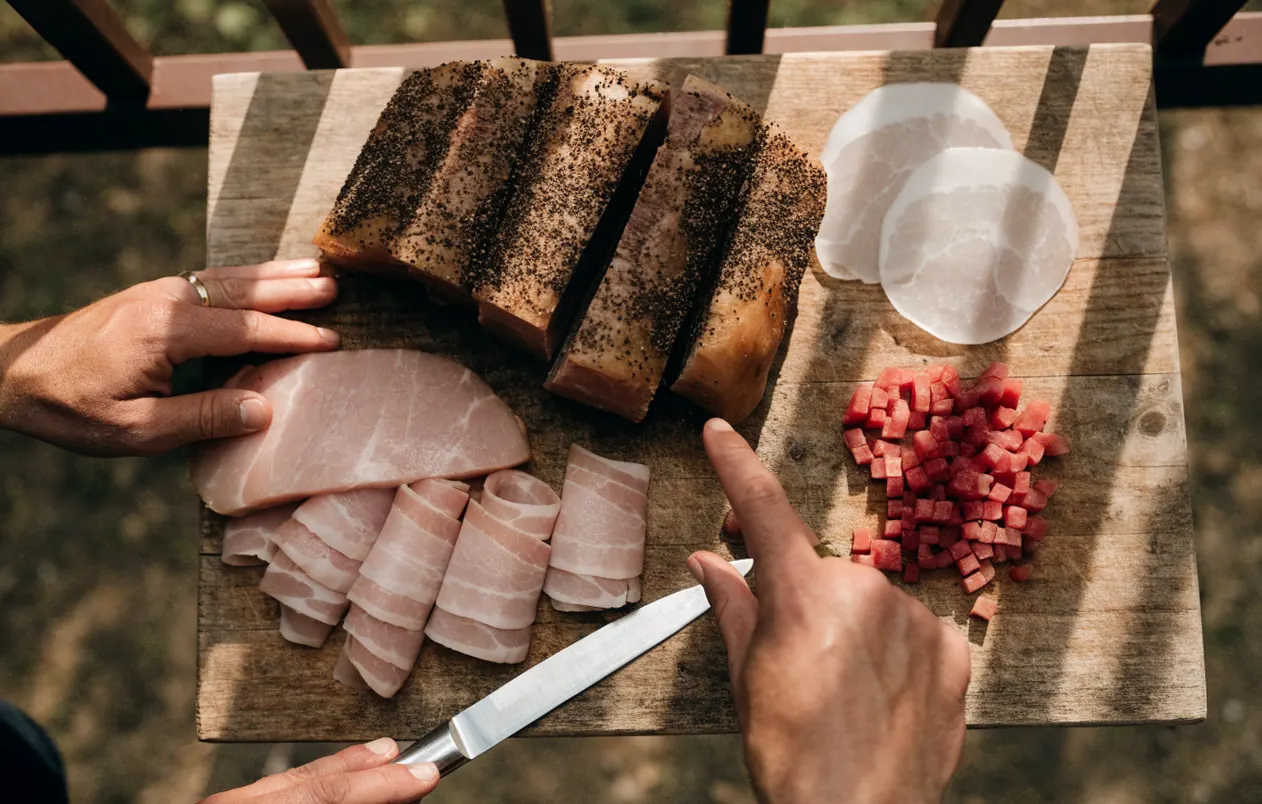
Guanciale, pancetta, lardo, speck: the differences
- Guanciale : The pork cheek and jowl, salted, rubbed with black pepper, and cured for several weeks. Very fatty and rich, it melts, becoming translucent and crispy. This is the bacon used in Roman pasta dishes.
- Pancetta : the brisket, salted, spiced, and then dried. It is tesa (flat) or arrotolata (rolled, rather than thinly sliced). Leaner and milder than guanciale.
- Smoked pancetta : the same pork belly, but smoked. This is Italian smoked pork belly, which is very common in the northern part of the country.
- Lardo : salted, seasoned, and slowly cured back fat, best enjoyed in thin slices on warm bread. The best-known variety, lardo di Colonnata, is cured in marble troughs. It is not cooked.
- Speck : A ham from South Tyrol—salted, lightly smoked, and aged. When diced, it adds flavor to pasta and risotto, but it is not bacon.
Where to Find Them and How to Prepare Them
Look for it in Italian grocery stores, in the deli counter section, or at the market: my colleague in Noailles always saves a piece of guanciale for me. Buy it in a block; it will keep for several weeks in the refrigerator, wrapped in paper. Remove the rind and cut it into strips 1 cm wide and 5 mm thick. Cook them in a cold skillet, without any fat, for 6 to 8 minutes over medium heat: the fat will turn golden and the meat will crisp up without burning.
Ingredients for 4 people: Pasta all’Amatriciana
- 400 g of bucatini or spaghetti
- 150 g of guanciale
- 400 g of canned peeled tomatoes
- 80 g of grated Pecorino Romano
- 5 cl of dry white wine
- 1 small dried chili pepper
- 1 tablespoon olive oil
- Coarse salt for pasta water
For 2 people, use 200 g of pasta, 75 g of guanciale, 200 g of tomatoes, and 40 g of pecorino.
Preparation: 10 min · Cooking: 25 min
The Step-by-Step Recipe
- Cut the skinless guanciale into sticks. Mash the peeled tomatoes with a fork.
- In a large skillet, add the oil, crumbled chili pepper, and guanciale. Cook over medium heat for 6 to 8 minutes, until golden brown.
- Deglaze with white wine and let it evaporate for 1 minute. Remove half of the guanciale with a slotted spoon and set it aside—it will stay crispy.
- Add the tomatoes and a small pinch of salt, then simmer for 12 to 15 minutes over low heat, until the sauce thickens.
- Meanwhile, cook the pasta in a large pot of lightly salted boiling water—since the guanciale and pecorino are already salty. Drain the pasta 1 minute before the package instructions call for, reserving one cup of the cooking water.
- Add the pasta to the sauce along with a small ladleful of the pasta cooking water, and sauté for 1 minute over high heat.
- Remove from the heat, add three-quarters of the Pecorino and the reserved guanciale, stir, and serve immediately with the remaining cheese.
My Cooking Tips
- In Amatrice, they don't use onions or garlic: the guanciale is enough to flavor everything.
- No guanciale? Thick-sliced pancetta will do in a pinch. Smoked bacon bits from the supermarket completely change the flavor—it’s nothing to write home about.
- Keep the fat rendered from the guanciale in the fridge—it's perfect for sautéing potatoes.
- Rigatoni work very well as a substitute for bucatini and hold the sauce in their ridges.
Under the pergola: how to serve
Amatriciana stands on its own: a lemon-infused arugula salad and some good bread, and you’re all set. With the tomato and the richness of the guanciale, a well-chilled Bandol rosé—enjoyed in moderation—is a perfect match.
If you're having guests, prepare the sauce an hour ahead of time and keep it off the heat: all that will be left is to cook the pasta at the last minute. Leftovers will keep for 2 days in the fridge.
Your Questions
What is the Italian word for bacon?
We're talking mainly about guanciale, which is dried pork cheek, and pancetta, which is pork belly. The word lardo refers to the aged back fat, which is eaten raw in thin slices.
What is the difference between pancetta and guanciale?
Guanciale comes from the cheek, while pancetta comes from the belly. Guanciale is fattier, more peppery, and more flavorful, and its fat melts as it becomes crispy; pancetta is leaner and milder. For carbonara and amatriciana, Roman tradition calls for guanciale.
What is "guanciale" in French?
Guancia "Cheek" in Italian: guanciale is salted and dried pork cheek, sometimes called "dried pork cheek." But the Italian word has become the standard term among butchers and delis.
What is Italian smoked pork belly?
This is pancetta affumicata, a salted and then smoked pork belly typical of northern Italy. It’s similar to our smoked pork belly, but more flavorful. Speck, which is also smoked, is a type of ham.
What kind of Italian bacon should I use for carbonara?
Guanciale, without a doubt: that’s what gives authentic Roman carbonara its flavor and crunch. If you can’t find guanciale, use thick, plain pancetta, but avoid smoked bacon bits.
Leave a Reply