
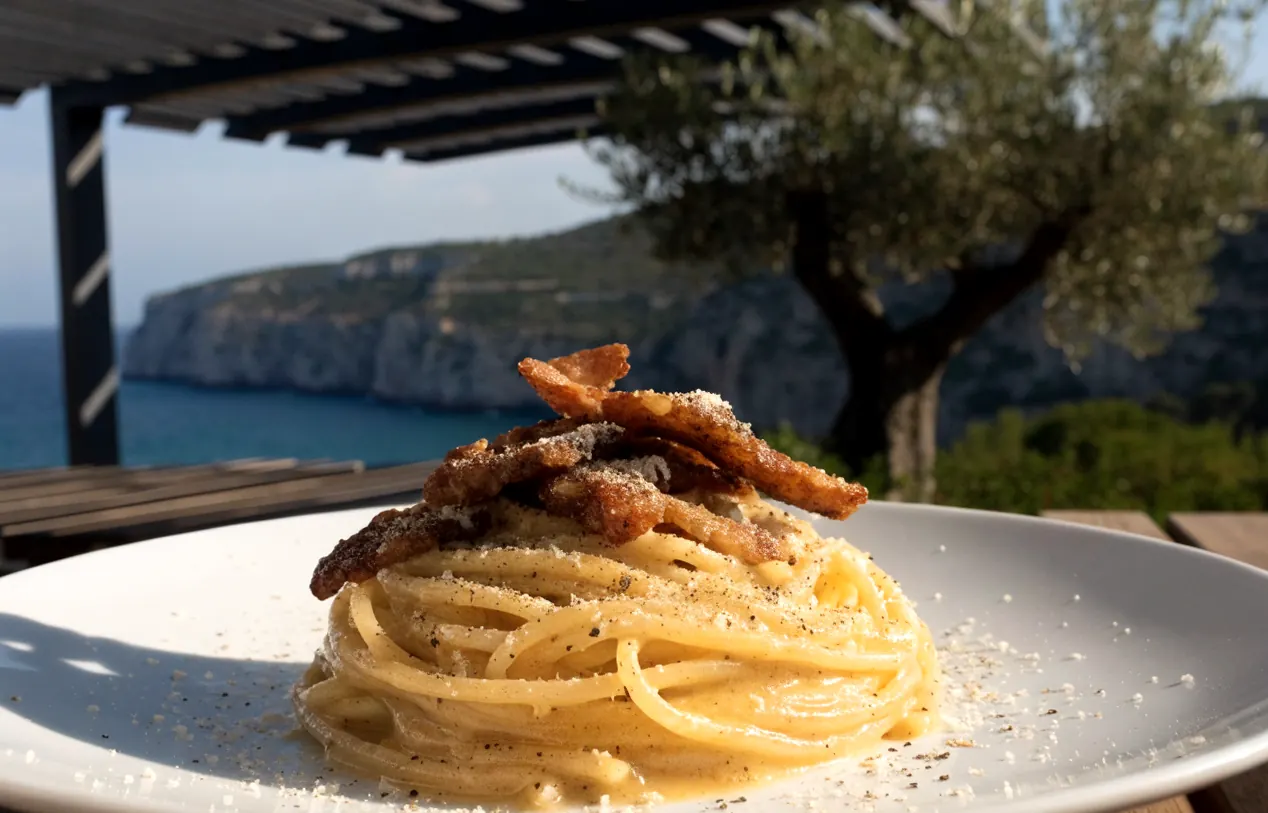
Authentic Roman carbonara consists of five ingredients: pasta, guanciale, Pecorino Romano, eggs, and black pepper, combined off the heat with a little pasta water. No cream, no onion, no garlic, and no smoked bacon.
As for pasta, go for spaghetti, rigatoni, mezze maniche, or tonnarelli. Simple? Yes, but there’s one step you can’t miss, and I’ll show you how under the pergola.
Ingredients for 4 people
- 400 g of spaghetti or rigatoni
- 150 g of guanciale
- 4 egg yolks and 2 whole eggs, extra-fresh
- 80 g finely grated Pecorino Romano (or 50 g Pecorino and 30 g Parmigiano Reggiano)
- 2 teaspoons of freshly cracked black pepper
- Coarse salt for pasta water
Serves 2: 200 g of pasta, 75 g of guanciale, 2 egg yolks and 1 whole egg, 40 g of pecorino, and 1 teaspoon of pepper. The method is the same.
Preparation: 10 min · Cooking: 15 min
The Step-by-Step Recipe
- Take the eggs out of the refrigerator 30 minutes beforehand. Bring a large pot of water to a boil, adding a little less salt than usual: the guanciale and pecorino are already salty.
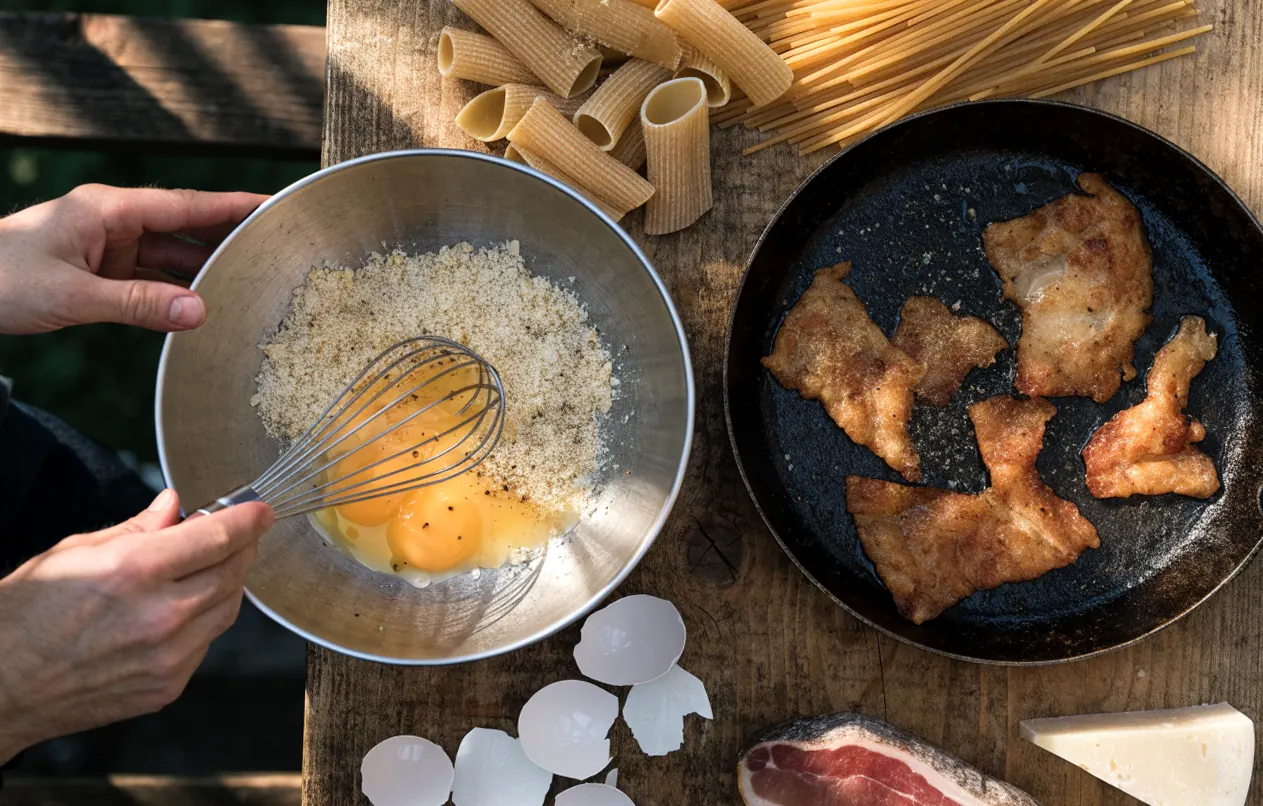
- Remove the rind from the guanciale and cut it into 1-cm sticks. Place it in a large, cold skillet without any fat and cook it for 8 to 10 minutes over medium-low heat until it is golden brown and crispy. Turn off the heat.
- In a mixing bowl, whisk together the egg yolks, whole eggs, Pecorino, and almost all of the pepper until you have a thick cream.
- Add the pasta to the boiling water and cook it for 1 minute less than the time indicated. Before draining it, set aside a large bowl of the cooking water.
- Add the pasta to the pan with the guanciale (with the heat turned off) and toss for 30 seconds to coat it with the fat. Wait a minute until the pan is no longer piping hot.
- Thin the egg mixture with 3 tablespoons of pasta cooking water, then pour it over the pasta. Stir vigorously while tossing the pasta in the pan, and add the pasta cooking water one spoonful at a time until you have a creamy, coating sauce.
- Serve immediately on warm plates, with the remaining pepper and a little pecorino.
My Cooking Tips
- If you're worried about the omelet, make the sauce in a double boiler: mix the pasta and egg mixture in a bowl placed over a pot of simmering water, stirring constantly. The sauce will thicken gently at around 65 °C.
- Grate the Pecorino very finely: if it's in large shavings, it doesn't melt well and forms strings.
- Sauté the crushed pepper for 30 seconds in the fat from the guanciale before adding the pasta: this brings out all its flavors.
- No need to go out of your way to find guanciale at midnight—thick pancetta will do just fine. Just avoid smoked bacon bits, which completely change the flavor.
Under the pergola: how to serve
Carbonara can’t wait: it’s made at the last minute and eaten right away, otherwise the sauce will set. Have your guests take their seats before draining the pasta. A simple arugula salad dressed with olive oil is all you need on the side, and a well-chilled Cassis white wine—in moderation—nicely cuts through the richness of the guanciale.
Use extra-fresh eggs and don't keep leftovers in the fridge for more than 24 hours. When reheated, they get dry—so it's better to just make enough.
Your Questions
What are the ingredients in authentic Italian carbonara?
Pasta, guanciale (dried pork jowl), Pecorino Romano, eggs, and black pepper—nothing more. Depending on the family, some use only egg yolks, while others use a mixture of yolks and whole eggs, and some of the Pecorino Romano may be replaced with Parmigiano.
What kind of pasta should you use for carbonara?
In Rome, it’s usually made with spaghetti or rigatoni, but also with mezze maniche or tonnarelli—square egg noodles. Choose bronze-cut durum wheat pasta: its rough surface holds the sauce better.
What's the secret to a good carbonara?
The mixture is prepared off the heat, in a warm skillet, using starchy cooking water. The eggs thicken without turning into an omelet, and the fat from the guanciale emulsifies with the pecorino to create a creamy sauce without a drop of cream.
Can you add crème fraîche to carbonara?
In the Italian recipe, never: the creaminess comes from the eggs, cheese, and cooking water. The French version with cream and bacon bits is a different dish—good in its own way—but it’s not carbonara.
Why does my carbonara have lumps?
The pan was too hot, and the eggs curdled all at once. Always turn off the heat, let the pan cool for a minute, and thin the egg mixture with a little cooking liquid before pouring it in. A double boiler is still the safest method.
Leave a Reply